|
What does your work involve?
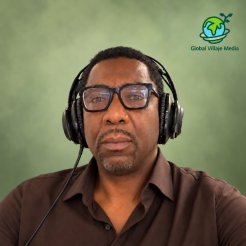
I am the Founder and General Manager of Global Villaje Media (GVM). GVM helps NHS organisations, charities and public bodies bridge the gap between services and Black African and Caribbean communities through trusted communication, culturally responsive engagement and community storytelling.
I host The Health, Wellness & Wellbeing Hour on Chalkhill Community Radio and Health Beyond the Headlines on Global Villaje Radio. Through interviews, lived-experience conversations and practical health information, my work focuses on improving health literacy, addressing health inequalities and promoting quality health.
I also lead the development of Living Well Insights (LWI), a public-benefit health initiative focused on community-led health education, prevention, advocacy and insight. LWI is currently awaiting a decision from the Charity Commission on its application for charitable registration.
Why are you interested in health inequalities research?
My interest comes from a concern that people’s opportunities to enjoy good health are still shaped by their ethnicity, circumstances and access to information and services. My background in health and social care education has reinforced the importance of making information understandable and useful in everyday life.
I want research to explain why inequalities persist and identify changes that communities can actually experience. For me, its value lies in whether it leads to better prevention, earlier support, more responsive services and greater dignity.
Why did you become a research champion with Communities 1st?
I have previous experience of undertaking community health research with different communities. One thing that struck me was the depth of distrust towards health authorities among some of the Black people I engaged with, compared with other communities. This made me want to understand those concerns and help create opportunities for open, informed conversations.
Through Global Villaje Media, I now have a platform dedicated to enhancing health literacy, addressing health inequalities and promoting quality health, with a particular focus on issues that disproportionately affect Black African and Caribbean communities. Becoming a research champion with Communities 1st therefore felt like a natural fit.
I see the role as supporting informed choices, making research opportunities more understandable and helping researchers listen to the communities they want to involve.
Why do you believe research is needed to improve equality for Black people?
The scale of some health inequalities makes research particularly urgent. According to Prostate Cancer UK, approximately 1 in 4 Black men will develop prostate cancer during their lifetime, compared with 1 in 8 men overall. Cardiovascular health is another concern, particularly high blood pressure and stroke. The British Heart Foundation highlights higher risks of high blood pressure and type 2 diabetes among Black African and African Caribbean communities. It's funded SABRE study found that African Caribbean participants had roughly double the risk of developing type 2 diabetes before age 80, compared with White European participants. Sickle cell disease also disproportionately affects Black African and Caribbean communities in the UK.
Research is needed to understand these differences and improve prevention, diagnosis, treatment and support. Black communities must have opportunities to shape the questions being asked and be adequately represented in the evidence informing healthcare.
We must also acknowledge historical harms associated with scientific racism, unethical research and exclusion, alongside continuing experiences of discrimination. Greater participation requires institutions to demonstrate that research is trustworthy and responsive.
Research must examine social conditions, racism and access to care alongside biological factors, rather than treating ethnicity alone as an explanation for inequality.
What barriers have you personally come across when attempting to improve research engagement?
Mistrust of health authorities and research institutions has been one of the most significant barriers I have encountered. In my previous community health research work, I was struck by how strongly this could affect people’s willingness to engage.
That mistrust needs to be understood in the context of historical harms and concerns about discrimination, unequal treatment and whether institutions genuinely listen. Questions about consent, confidentiality, the use of samples and personal data, and who benefits from research need clear, respectful answers.
Other barriers can compound these concerns: unfamiliar terminology, information that does not feel relevant, digital exclusion, and pressures around work, caring responsibilities, travel and time. People may also question the value of involvement if they never hear what a study found or how their contribution made a difference.
What would you like to see happening in research over the next five years? Is there any advice you would give researchers?
I would like to see Black African and Caribbean communities involved from the point at which research priorities are decided, with a meaningful say in how projects are designed, delivered and interpreted. Community involvement should be properly funded, with recognition of the expertise that lived experience brings.
Practical changes should include plain-language information, opportunities in familiar community settings, flexible appointments, support with participation costs and clear explanations about data use. Communities should also hear what research found, how their input influenced it and what changes are being pursued as a result.
My advice to researchers is to listen before designing your approach. Ask whose priorities the project reflects, whose voices are missing and what your own processes might be making difficult. Black communities are diverse, so one approach will not suit everyone.
I would like us to move away from automatically describing communities as “hard to reach” and ask whether our institutions and approaches are easy to access.
Trusted communication can help create the conditions for equitable research participation, but trust also depends on what organisations do: how they listen, respond, protect people’s rights and share benefits.
Above all, build relationships that last beyond recruitment targets and project deadlines. Research should leave communities better informed, more able to influence decisions and able to see the value of their contribution.
On behalf of Communities 1st, I want to thank Charles for his time today and ongoing dedication to improving Black health, reducing inequalities and being a Community Research Champion with Communities 1st. Find out more about his work below.
|